Relevé habité et analyse de la répartition spatiale des fonctions – Unité « Joto » - EHPAD Les Sources de Bostens
Identifying different types of long-term care facilities, architect and sociologist Manon Labarchède researched their link with the conditions in which people are cared for.
She conducted interviews with various stakeholders (project leaders, residents' families, building contractors) and made observations in situ.
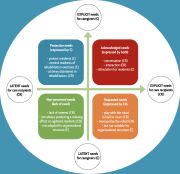
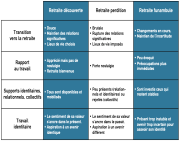
She noted different conceptions of space depending on the type of facility. Dedicated units, for example, combine security and closed spaces; demarcation of areas and their uses; and strict organization of the unit (Figure).
She demonstrates that architecture and living conditions are linked and describes the hospitality provided in different types of facilities. Hospitality is controlled within dedicated units, with the aim of limiting the effects of the disease and its manifestations. It is “self-sufficient” in the case of specialized facilities, causing residents to withdraw into their own world and become cut off from their environment. It is inclusive in more innovative projects, focused on a desire for social and spatial integration of facilities and people into their environment.
Manon Labarchède demonstrates the important role of architecture in the functioning of long-term care facilities and the living conditions of residents. While architecture provides a framework for understanding social processes, it is also a factor for change, adapted to new knowledge about the disease and evolving normative and regulatory frameworks, as well as an element of inclusion and integration that allows the needs of residents and their families to be met.
Architecte D.E - Docteure en sociologie, Membre permanent du laboratoire PAVE (ensap Bordeaux) et membre associé au centre Emile Durkheim (UMR 5116)
- Labarchède Manon. (2021). Les espaces de la maladie d’Alzheimer : conditions de vie hébergement et hospitalité. Thèse de doctorat de sociologie sous la direction de Guy Tapie et Muriel Rainfray. Bordeaux : Université de Bordeaux. 420 p
- Labarchède Manon. (2018). « Repenser l’hospitalité pour l’hébergement des personnes atteintes de maladie d’Alzheimer : représentations de l’habitat et pratiques de l’espace », Cahiers thématiques du LACTH, n°18 (Hospitalité(s). Espace(s) de soin, de tension et de présence), pp. 89-98.